Spotlights
Kira Vang - Biotechnology Lab
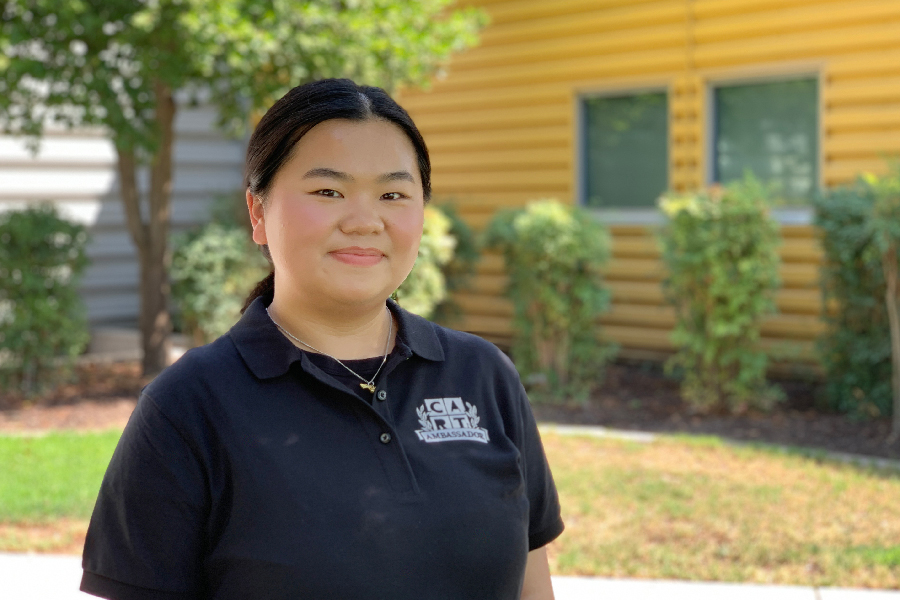
Hello, my name is Kira Vang. I am a senior at Sunnyside High School and a second year CART student. For my junior year, I took the Forensic Science lab, which in my opinion, is one of the best labs offered at CART! Having been here for the past 2 years now, CART has taught me how to become a better team player, leader, student, and version of myself.
Now, for my senior year, I am in the Biotechnology lab. Recently, we have begun gel electrophoresis and also learned about protein synthesis (how DNA is transcripted into mRNA, so that mRNA can translate instructions to the ribosomes to make protein in the body).
My class did a lab using PCR and gel electrophoresis to uncover if someone has the PTC gene. The PTC gene is a gene in your genetic sequence that allows you to taste bitter things. The most interesting thing about this gene is that not everyone has it! My teachers are great examples of the different variants of PTC genotypes as each of them have a genotype that differs from one another. Mr. Jordan is homozygous recessive, meaning he has the non-taster variation of the PTC gene and can’t taste if something is bitter. My class collected cheek cell samples by swishing a saline solution in our mouths. After 30 seconds, we spat the solution into a cup to use in PCR. PCR, Polymerase Chain Reaction, is a revolutionary genetic technology that allows us to amplify our DNA by making millions of copies from a small sample. Using PCR in this lab allows us to get millions of copies of the PTC gene in our body without having to get more cheek cell samples from our mouths! How cool is that?
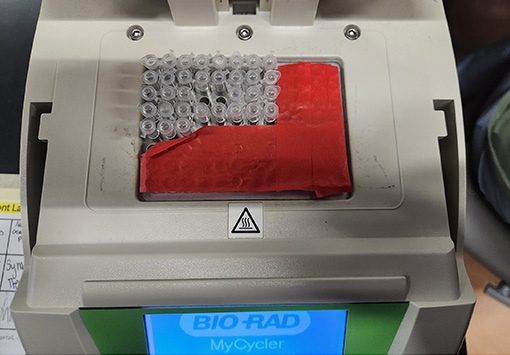
What is really cool is how the PCR machine is able to separate double stranded DNA into a single stranded DNA, so that primers in the technology can bind to a targeted DNA sequence in order to help heat-resistent polymerase add nucleotides to the primers to create new DNA. The PCR machine can do this in a matter of hours and very quickly at different temperatures. Once we have made millions of copies from that one DNA sample, we separated that one DNA sample into two samples. One to add a restriction enzyme in order to find the different tasting variations we have and our uncut DNA sample to compare it to. We specifically used a restriction enzyme, FNU4HI, because its recognition site matches the PTC gene on chromosome 7, making a number of cuts along the DNA sequence. This is really helpful when we do gel electrophoresis to detect the different cuts made in one DNA sequence, which shows up in various bands at different lengths of the gel to allow us to see what our PTC gene variation is.
I attached a gel photo that includes my lab partner and my DNA. We both have the Tt variation, which means we can taste bitter things!